
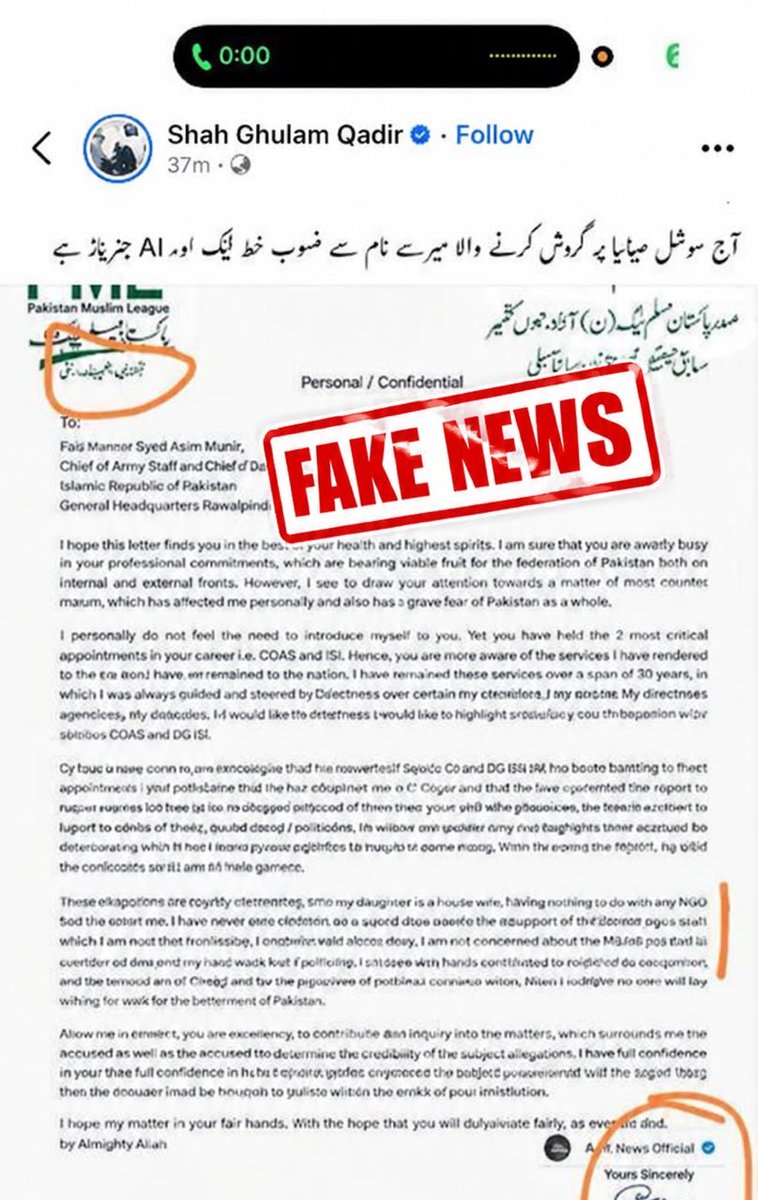
" LETTER EXPOSEDA letter circulating in the name of Shah Ghulam Qadir is AI-generated and a fact he himself has confirmed.It has no credibility and is being deliberately circulated as propaganda.#FactCheck #FakeNews #Propaganda https://t.co/XbFG3xSlZs"
A letter purporting to be from Shah Ghulam Qadir has recently surfaced on social media, sparking widespread concern and controversy. However, it has been confirmed by Qadir himself that this letter is not genuine and is, in fact, a product of intelligence. The situation raises vital questions about the spread of misinformation in today's digital age.
The emergence of this letter demonstrates the increasing sophistication of technology used to create misleading content. As AI tools become more accessible, the potential for such fabrications increases, putting public figures and the societal record they contribute to at risk. Shah Ghulam Qadir's quick acknowledgment serves to protect his reputation while highlighting the need for critical discernment among the public regarding the information they consume.
Internationally, the issue of news and AI-generated misinformation has garnered attention as various governments and organizations grapple with establishing frameworks to combat it. While specific reactions to this incident in Pakistan are still unfolding, the example underscores a global challenge that can undermine democracy and public trust. Collaboratively, nations are exploring ways to foster digital literacy and enhance media responsibility to mitigate the impact of such propagandistic tactics.
As technology continues to evolve, enhancing personal and civil awareness becomes paramount. Shah Ghulam Qadir's experience emphasizes the importance of approaching online content skeptically, particularly when it contradicts established facts. Strengthening public education on media literacy and encouraging dialogue on these issues can prevent similar occurrences in the future, reinforcing the integrity of civil discourse in Pakistan and beyond.

